Product Creation
We help organizations explore a new product or service, understand its users and translate early ideas into a focused product concept. Research, strategy, interaction design and testing create a stronger basis for deciding what the product should do — and what it does not need to do yet.
Some of our product creation projects
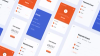

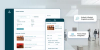
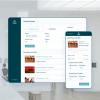
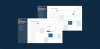
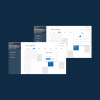
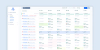
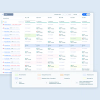


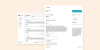

A promising idea is not yet a product. Before significant time and budget are committed to development, assumptions about users, needs, workflows and features need to be examined.
Benefits
Evidence instead of assumptions
Research and testing create a stronger basis for product decisions than internal opinions alone.
Clearer product direction
The product’s purpose, audience and core value become easier to define and communicate.
Better understanding of users
Real needs, behaviors, frustrations and existing workflows become visible before solutions are fixed.
Focused MVP scope
Features are prioritized around what creates value and what needs to be learned first.
Reduced development risk
Important questions can be explored and tested before they become expensive implementation decisions.
Ready for development
The product direction is translated into clear flows, prototypes and a realistic scope for the first release.
What the program can include
Product discovery workshop
We bring together the relevant stakeholders to clarify the initial idea, business context, known requirements and open questions. The workshop helps create a shared understanding of what the product is intended to achieve and which assumptions need to be investigated.
Stakeholder interviews
We speak with people who understand the organization, service or operational context from different perspectives. This helps uncover requirements, constraints, internal knowledge and conflicting expectations that may not be visible in the initial brief.
Competitive and comparative analysis
We review relevant products, services and established patterns to understand how similar problems are currently solved. The goal is not to copy competitors, but to identify expectations, gaps and opportunities for a more useful approach.
Heuristic evaluation
Where an existing product, prototype or comparable service is available, we assess it against recognized usability principles. This can reveal structural issues, unclear interactions and recurring friction before more extensive research or redesign begins.
User research
We use interviews, observation, surveys, contextual inquiry or other suitable methods to understand the people the product is intended to support. Research explores their goals, behaviors, frustrations, language, mental models and current ways of solving the problem.
Quantitative research and analytics
Existing analytics, usage data, surveys or other quantitative sources can help show how often particular behaviors occur and where larger patterns emerge. These findings complement qualitative research and help avoid relying on isolated observations.
Research synthesis
We organise observations and evidence into themes, patterns and areas of opportunity. Methods such as affinity mapping help turn individual findings into a shared understanding that can guide the product direction.
Personas or Jobs to Be Done
Where useful, we translate the research into practical frameworks that describe relevant user groups, situations, motivations and desired outcomes. These become working tools for product decisions rather than demographic profiles for their own sake.
Problem definition
We define the core problem the product should address, including who experiences it, in which context and why current alternatives are insufficient. A clear problem definition helps prevent the product from becoming a collection of loosely connected features.
Product principles and value proposition
We establish a small set of principles that guide what the product should prioritize and how it should behave. These principles provide a consistent basis for evaluating ideas and making trade-offs throughout design and development.
Information architecture
We structure the product’s content, functions and navigation so that the system reflects how people understand and use it. This creates the foundation for clear flows and a coherent interface.
User flow design
We map the steps people need to take to complete important tasks. The flows help clarify decisions, dependencies, system responses and potential points of friction before detailed interface design begins.
Wireframes
We explore the structure of screens and interactions without committing too early to visual detail. Wireframes make it possible to compare approaches, discuss functionality and refine the product logic efficiently.
Interactive prototyping
We turn key flows into a realistic prototype that can be experienced and tested before development. This helps stakeholders understand the proposed product and allows interaction decisions to be evaluated in context.
Usability testing
We test the concept or prototype with representative users to see where it is clear, where it creates confusion and whether it supports the intended tasks. The findings are used to refine the product before implementation.
MVP definition and prioritisation
We translate the product direction into a focused first release. Features are prioritized according to user value, organisational goals, technical dependencies and what needs to be learned first.
Development-ready interface design
Where required, the program can extend into detailed interface design with defined layouts, component states and interaction behavior. The result can be prepared for direct handover to an internal or external development team.
Product roadmap
We distinguish between the first valuable release and possible later development. This creates a practical roadmap without pretending that every future feature can or should be decided at the beginning.
The program is suitable for new digital products, service platforms, internal tools, startup concepts and existing ideas that need a clearer direction before development or major investment. It can begin with broad research and discovery or focus on validating a more developed concept. The exact methods depend on what is already known, what remains uncertain and which decisions need stronger evidence.
The result is a product concept grounded in real needs, a focused MVP scope and a clear foundation for design and development.