Structured Web Platform
When a website has to manage large amounts of content or data, support different user roles, provide login areas, handle multilingual structures, connect to other systems or make complex information searchable and usable.
Some of our platform projects
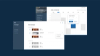

The program can include public-facing websites, internal portals, directories, documentation systems, knowledge platforms, member areas, admin interfaces or custom workflows.
Better findability
People can find information through structure, search and semantic relationships — not only exact keywords.
Clearer knowledge structure
Taxonomies, metadata and content relationships make large bodies of information easier to navigate.
Reduced support pressure
When people can find better answers themselves, repeated questions and unclear documentation become visible.
Content gap insights
Analytics can show unanswered questions, failed searches and areas where information is missing or unclear.
Built for complex information
The platform is designed for documentation, archives, research, public knowledge and other content-heavy systems.
What the program can include
Content and requirements mapping
We start by understanding what the website needs to hold and do. This can include existing content, datasets, user groups, permissions, languages, workflows, integrations and long-term requirements.
Information architecture
We define the structure of the platform: content types, relationships, navigation logic, taxonomy, metadata and page structures. The goal is to make complexity manageable without flattening it.
Advanced CMS architecture
The CMS is designed around structured content, not only pages. It can include reusable modules, custom content types, editorial roles, workflow states, preview environments, multilingual content and permission-aware editing.
Frontend system
The frontend is built for clarity, speed, accessibility and maintainability. It can support large content structures, filtering, search, dynamic views, interactive elements and different presentation needs.
Search and filtering
For content-heavy websites, we can design search systems that go beyond a basic search box. This can include filters, categories, tags, metadata, relevance tuning, internal linking, related content and semantic retrieval.
Login areas and permissions
Where needed, the platform can include member areas, restricted content, admin roles, internal sections or different levels of access for users and editors.
Multilingual structures
Multilingual websites need more than translated pages. We define how languages relate to each other, how fallbacks work, how editors manage translations and how content stays consistent across versions.
Data and integrations
The platform can connect to external APIs, datasets, CRMs, newsletter tools, booking systems, archives or internal workflows. The aim is to make the website part of the organization’s digital system, not an isolated endpoint.
Semantic and AI-ready layer
For knowledge-heavy platforms, the system can include semantic search, embeddings, grounded AI answers, citations, source attribution and analytics for unanswered questions or content gaps. This is added where it creates real value, not as a decorative feature.
Analytics and improvement
The platform can be designed to learn from use: search queries, failed searches, popular content, missing information, form usage or other signals that help the organization improve the system over time.
The website becomes a maintainable platform instead of a collection of pages. Content is easier to structure, editors have clearer workflows, users can find information more effectively, and the system can grow as requirements change.
Instead of treating complexity as an exception, the platform is designed to handle it from the start.